How to Check
Your Skin

Getting to know your skin and every lump, bump, mole, freckle and mark by performing monthly, full-body skin examinations is essential in recognising subtle changes that could indicate the early warning signs of potentially cancerous lesions. Our skin checking tips, supportive resources and step-by-step guide, will help you take charge of your skin surveillance.

PRE- SKIN CHECK RECOMMENDATIONS

Skcin recommend you perform a full-body skin examination once a month – it’s simply the smartest way to get to know your skin, build confidence in identifying potential abnormalities and catch skin cancer it in its early stages.

There are many types of skin cancer that vary greatly in appearance. Before performing your examination we recommend learning about the various types  and their visual signs and symptoms. The following links provide detailed advice and images to help you recognise abnormalities that could indicate the early warning signs of melanoma, non-melanoma skin cancer and precancerous skin conditions.

SKIN CANCER TYPES, SIGNS AND SYMPTOMS

SKIN CHECKING TIPS

Get to know your skin:  Skin cancer seldom hurts and is far more frequently seen than felt. Get to know every lump, bump, spot, mole, freckle and mark to help you build confidence in identifying changes over time. 

New moles: Around 70% of melanoma appear as a new mole. Whilst the development of moles in adolescence is common, it is far rarer in adulthood. Therefore, the appearance of a new mole (particularly after the age of 25) is worthy of your special attention.

If you have a large number of moles or freckles: If you have a large number of freckles, moles and/or atypical (irregular looking) moles you are at greater risk of skin cancer and in some cases keeping track of changes can be challenging. In addition to performing thorough, monthly self-examinations, you may wish to consider investing in mole screening and/or mapping services – particularly if you have a history of sunburn, tanning, sunbed use, or a family history of skin cancer. For further advice on skin cancer risk factors go to:  Skin Cancer Risk Factors

If you have tattooed skin: The visual signs and symptoms of skin cancer may be difficult to detect in areas of tattooed skin, so pay special attention and make sure you give the area a good feel too.

People with skin of colour: People with darker skin tones particularly dark brown or black skin are more likely to develop certain types of skin cancer in areas of lighter skin, not exposed to sunlight – for more information go to: Skin cancer in skin of colour

If in doubt – get it checked out! It’s important to get any new, unusual or changing moles or skin lesions professionally assessed. Early detection, diagnosis and treatment can make a huge difference to patient outcomes and can save lives. So, if you have any concerns, get them checked out and continue to keep a close eye on them for signs of change – the biggest indicator of a potential skin cancer.

WHO’S GOT YOUR BACK? – SKIN CHECK BUDDIES

Skin checking can be a challenge when you are performing it alone. Checking your scalp and back of the body for example is often difficult and taking photos almost impossible – as a result potential warning signs may be missed. If you are in an intimate relationship you are ideally placed to help one another, if not consider asking a close friend or family member to help – and in return you can help them. Either way, it is the perfect opportunity to involve the people you care about and share in potentially life-saving knowledge and healthy habits.

TEENS AND SKIN CHECKING

It’s important to talk to teens about skin cancer prevention and why regular skin checking is a must. Although their skin will be changing, often dramatically throughout adolescence – getting them aware of changes and helping them understand more about their skin health and surveillance will help drive behavioural change and healthy habits. Although skin cancer is rare in teens, they are at a particularly vulnerable age and often swayed by tanning trends via social media. Sunbed use, albeit illegal for 18’s is also not uncommon. It is this culture of tanning that is the reason why melanoma is now one of the biggest killing cancers in the 15-34 age group and why regular skin checking is a must for young adults.

SUPPORTIVE SKIN CHECK RESOURCES

When performing your skin examination it’s important to take photographs and make note of any moles or lesions that you feel may be cause for concern. Recording the lesions’ location, the date it was inspected, it’s size, shape, colour, surface characteristics and sensation can help you identify subtle changes on a monthly basis. We have two resources to help you:

Lesion tracking body map and record chart: A handy free download to help you track, record and monitor changes to moles and skin lesions

The Skcin mobile app: The Lesion Tracker feature within the Skcin app enables users to track, monitor and compare multiple lesions using close-up photography. Handy tools allow users to effectively manage each lesion with recorded details, notes and handy SMS alerts. Users can also receive advice and signposting by conducting self-assessments of lesions through a series of specific questioning. You can trial the feature for free for 1 month with absolutely no obligation – if you like it and wish to subscribe after the trial, it costs just 99p per month, charged annually. The app contains lots of free tools too – helping you take charge of your skin health and surveillance.

SKIN CHECK PREPARTATION CHECK LIST

Ideally you should conduct your full-body skin examination in bright or well lit room, have someone to help you check hard to see areas (if possible) and have the following items to hand:

  • A full-length mirror
  • A hand-held mirror
  • 2 Chairs or stools
  • A hair dryer and/or a comb (if required)
  • A ruler to measure any lesions of concern (mm)
  • A phone to take photos (ideally)
  • Either the body map download (above)
    or the Skcin app lesion tracking tool
    or simply a pen and paper to make notes

YOUR 5 STEP GUIDE TO PERFORMING A THOROUGH SKIN EXAMINATION

Once you are prepared and ready to begin, remember that during each of the five skin check steps detailed below, you are looking for signs of any NEW, UNUSUAL or CHANGING moles or skin lesions.  If you spot anything that may be of concern, take a photo, record details, keep track of changes and always see your GP for professional clinical assessment.

CHECK YOUR FACE AND SCALP

  • Using one or both mirrors, examine your entire face. Pay close attention to your nose, lips, mouth and ears (don’t forget to check behind your ears).
  • Give your scalp a good feel for any lumps, bumps or crusts. Use the mirrors to thoroughly inspect your scalp and a hair dryer or comb (if necessary) to help expose each section of skin. If possible, get someone to help you check hard to see areas.

CHECK YOUR ARMS, HANDS & FINGERNAILS

  • Concentrate on one arm at a time.
  • Starting at the top of your shoulder, thoroughly inspect both sides of your entire arm including your armpits.
  • Inspect your hands, including your palms.
  • Inspect your fingernails (without polish).

CHECK YOUR NECK CHEST AND TORSO

  • Focus on thoroughly checking your neck, chest and torso.
  • Make sure to lift the breasts to check the undersides.
  • Check your sides as far round to your back as you can see.

EXAMINE YOUR BACK AND BUTTOCKS

  • If you don’t have someone to help you check hard to see areas, stand with your back to the full-length mirror and use the hand mirror to inspect the back of your neck, shoulders and upper back.
  • Now inspect your lower back and buttocks.

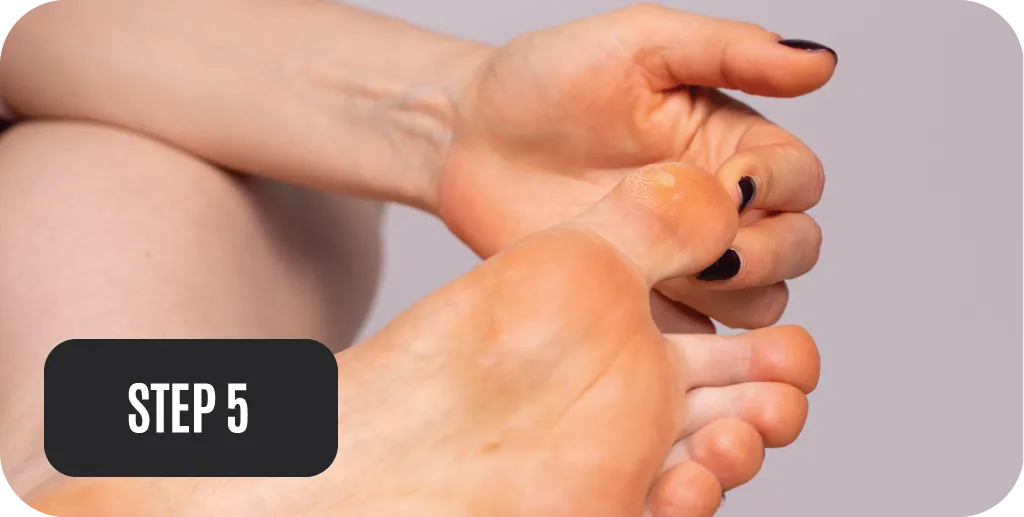
EXAMINE YOUR GENTILALS LEGS AND FEET

  • Start by sitting down and propping each leg, in turn on the other chair/stool. Use the hand mirror to examine the genitals.
  • Concentrating on one leg at a time, thoroughly inspect each leg, back and front – from the tops of the thighs down to the ankles.
  • Inspect your feet, including the soles.
  • Finally, inspect your toenails (without polish).

REMEMBER

Remember to photograph and record details of any concerns, set a reminder on your phone (or use the Skcin app) to remind you when your next monthly examination is due  – and ALWAYS see your GP with any NEW, UNUSAL OR CHANGING moles or skin lesions that have lasted more than a few weeks.

YOU MIGHT ALSO BE INTERESTED IN:

Skin Types and Skin Cancer

Use the Fitzpatrick scale to identify your pigmentary phototype and how it responds to UV radiation to further understand your level of risk for the development of skin cancer and the steps required to help reduce that risk.
Learn More

Skin Cancer Risk Factors

Whilst we are all at risk of developing skin cancer, there are various factors that place individuals at greater risk - if you fall into one or more of these categories you should take extra care to protect your skin and check it regularly for signs of change.
Learn More

Taking Action with Concerns

Early diagnosis of skin cancer is vital. Seeking immediate advice from a qualified healthcare practitioner with concerns can make a huge difference to patient outcomes. It is therefore important, to feel confident in taking action by being aware of the process and your options.
Learn More

WANT INSTANT ACCESS TO SKIN CANCER IMAGES, EARLY DETECTION ADVICE AND LESION TRACKING TOOLS?

Install the Skcin app on your mobile device to access all the tools and resources you need to confidently perform full-body skin examinations, set monthly reminders, and track lesions for signs of change using close-up photography.

The Skcin app is a comprehensive, educational, and self-management tool dedicated to the prevention and early detection of skin cancer. The app comprises six key service areas to help you learn more and take charge of your skin health and surveillance.